

Публикации по производству
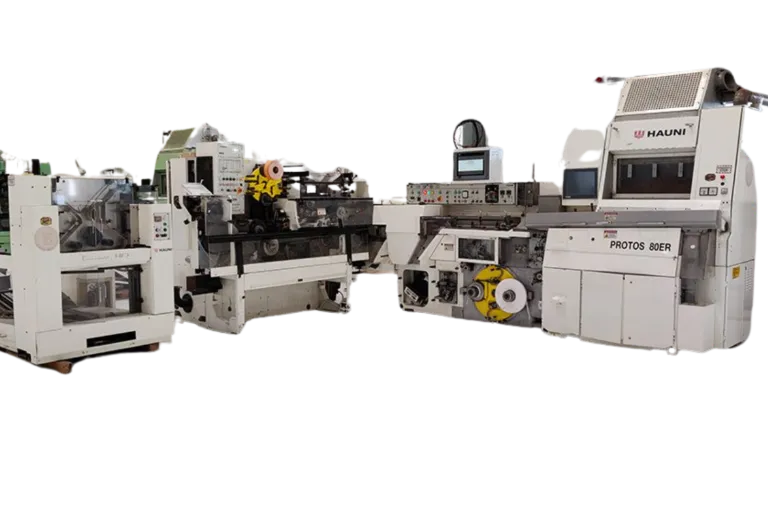
A Hauni Protos running at 7,000 to 8,000 cigarettes per minute does not stop cheaply. Every hour offline represents a volume of lost production that compounds across shifts, affects delivery schedules and costs far more than the value of any spare part that could have prevented the stop. The manufacturers who minimise unplanned downtime on their Протос 70 и Протос 80 ER machines are not those with the best luck. They are those with the right parts on the shelf before they need them.
This article covers the specific spare parts categories that belong in every Protos operator’s on-site inventory, how to think about stocking levels for each category, and the planning logic that separates a reactive maintenance operation from a predictive one.
The Three Categories of Spare Parts Inventory
Before listing specific components, it helps to apply a consistent framework for thinking about which parts belong in your on-site inventory and at what stocking level. Every spare part your Protos needs falls into one of three categories, and the stocking decision for each category is driven by different considerations.
The first category is consumables. These are parts with defined, predictable service lives that are replaced on a scheduled basis regardless of whether they have failed. Garniture tapes, suction rollers and cutting knives fall here. You know they will need replacing within a defined number of operational hours. They should always be in stock because running out of them is entirely foreseeable and entirely preventable.
The second category is predictive replacements. These are components that do not have a fixed replacement interval but whose condition can be monitored and whose replacement can be anticipated before failure occurs. Glue nozzles, sealing elements and guide components fall here. The machine gives you signals that these components are approaching the end of their usable life. If you are reading those signals and acting on them during planned maintenance windows, you avoid the unplanned stop. If you are not stocking the replacement parts, reading the signals correctly does not help.
The third category is insurance parts. These are components with low failure probability in any given operational period but with high downtime consequence when they do fail. Long-lead-time components, specialist electronic or sensor components, and any part that cannot be sourced quickly from standard distribution channels belong here. The cost of holding one unit of an insurance part is small compared to the cost of waiting two to four weeks for it to arrive while your Protos sits idle.
Consumables: The Parts That Must Always Be on the Shelf
Декоративные ленты
The garniture tape is the component that carries the tobacco rod through the forming stage of the cigarette making process. It is a continuous belt running at high speed through the garniture section, in constant contact with tobacco and paper, under consistent tension and heat exposure. It wears. It stretches. It eventually fails. And when it does, production stops immediately.
Garniture tape replacement interval varies by machine speed, tobacco type and running conditions, but the pattern is consistent: a garniture tape does not give you much warning before it goes. An experienced operator can read early signs of wear, but the window between first visible degradation and tape failure is short. This is why you hold multiple garniture tapes in stock at all times, not one. Running with a single spare tape means that the moment your current tape fails and you fit the spare, you have zero stock again. One failure away from a sourcing crisis.
Garniture tapes are available for both the Протос 70 и Протос 80 ER through established Запасные части Hauni Protos suppliers. Confirm the correct tape specification for your machine model before ordering, as tape dimensions and specifications differ between the two machines and between different production configurations.
Всасывающие ролики
The suction roller is critical to the tobacco rod forming process on the Protos. It uses controlled suction to hold the tobacco stream against the garniture as the rod is being formed, ensuring the tobacco is correctly positioned before the paper wrap is applied. If the suction roller is worn, has blocked suction ports or has lost its dimensional accuracy, the tobacco stream distributes unevenly in the garniture and rod weight variation follows immediately.
Suction roller wear is gradual rather than sudden. The roller’s suction port geometry degrades over time, and its surface wears with friction against the tobacco stream. Regular inspection allows you to track this degradation. The practical consequence of tracking it without having a replacement suction roller in stock is that you observe the problem developing, decide to wait until a maintenance window to replace it, and then discover that a roller is not available for two weeks. The inspection without the inventory is half a maintenance programme.
Режущие ножи
The cutting knives on a Protos machine sever the continuous tobacco rod into individual cigarette lengths. They operate at high cycle rates, performing thousands of cuts per minute across extended production runs. Blade edge geometry degrades with use, and a worn cutting knife produces a cut that compresses the rod end rather than severing it cleanly. The consequence is a flared or distorted cigarette end that causes problems at the filter attachment stage and produces a cosmetically unacceptable finished cigarette.
Cutting knife replacement is one of the more frequent maintenance operations on a high-speed Protos running three shifts. Operators familiar with the machine’s cutting behaviour can identify when knife performance is degrading from the quality of the cut ends they observe. Having a set of replacement cutting knives available means this maintenance can be performed during a planned stop, rather than being deferred until the degradation is severe enough to cause a production stop or a quality hold.
Клеевые насадки
Glue nozzles apply the adhesive that seals the cigarette paper seam as the rod passes through the garniture. The nozzle is in continuous contact with hot adhesive at production speed and is vulnerable to blockage from adhesive residue buildup and to wear from the thermal cycling that occurs each time the machine starts and stops. A blocked or worn nozzle produces a seam that either does not bond or bonds inconsistently, resulting in open seams and broken rods in the production output.
Glue nozzle condition is relatively easy to monitor during production through observation of the seam quality on finished cigarettes. When seam failures begin appearing in the output, the nozzle is typically the first component to inspect. Having a replacement nozzle available means this diagnosis can be followed immediately by a repair, rather than by a sourcing delay that extends what should have been a brief planned stop into an extended unplanned one.
Predictive Replacements: What to Stock Based on Machine Hours
Sealing Elements and Heat Seal Components
The sealing elements that bond the cigarette paper seam are subject to thermal stress with every production cycle and degrade in their ability to deliver consistent bonding temperature and pressure over time. Unlike the garniture tape, which fails relatively suddenly, sealing element degradation is gradual and shows up first as increased seam failure rates rather than a complete machine stop. This gradual onset makes it easier to monitor but also easier to defer unnecessarily, until the failure rate reaches a level that drives a production stop during peak output hours.
Log sealing element condition against machine hours and replace on a defined schedule rather than waiting for observable performance degradation. The cost of a scheduled replacement during a planned maintenance window is always lower than the cost of an unplanned replacement during a production shift.
Suction Drum Components
The suction drum system that manages tobacco distribution through the rod making section includes components that wear with continuous high-speed operation and occasional contact with tobacco debris. Drum surface wear affects the uniformity of tobacco distribution into the garniture and shows up as rod weight variation that is often misattributed to tobacco feed inconsistencies rather than correctly diagnosed as drum wear. Keeping suction drum components available for planned replacement avoids the diagnostic confusion that arises when this wear develops gradually and its contribution to rod weight variation is not immediately obvious.
Filter Tip Attachment Belts and Tapes
The filter attachment section of the Protos uses belts and tapes to transport and position filter rods during the attachment and double-wrapping process. These components are under continuous tension and run at high speed against tobacco and paper surfaces. Belt and tape condition directly affects filter alignment accuracy, and misaligned filters are one of the most common sources of quality rejects at the inspection stage downstream of the maker. Replacement belts and tapes for the filter attachment section are standard stocking items for any facility running the Protos at commercial volumes.
Insurance Parts: Low Probability, High Consequence
Sensor and Electronic Components
The Protos series uses electronic sensors throughout the rod making and filter attachment sections to monitor process parameters and detect fault conditions. These components have low failure rates in normal operation, but when they do fail, the replacement lead time through specialist channels can be significant. A sensor failure that cannot be resolved from on-site stock means a production stop that lasts as long as the sourcing and delivery time for the replacement component.
The practical approach is to identify the two or three sensor types on your specific Protos configuration that would cause the most severe production impact if they failed and could not be replaced immediately, and hold one spare of each. The carrying cost of holding unused electronic spares is modest. The production loss from waiting for them when they are needed is not.
Pneumatic Components and Actuators
Pneumatic cylinders and actuators manage a range of mechanical functions on the Protos that are critical to continuous operation. These components have defined service lives and generally give early indications of wear through changes in cycle timing and movement consistency that experienced operators detect during routine monitoring. Holding a small stock of the most commonly replaced pneumatic components covers the majority of unplanned stops in this category without requiring a large inventory investment.
Protos 70 vs Protos 80 ER: Parts Overlap and Differences
Both the Protos 70 and Protos 80 ER share HAUNI’s Protos platform engineering, but they are different machine configurations and not all spare parts are interchangeable between them. The Protos 80 ER integrates the S7000 rod maker, M8000 filter tip attachment and F80 auto tray filler as a combined unit with power requirements of approximately 50kW, 20kW and 15kW respectively across these three sections. The Protos 70 is a different configuration with different component specifications in several areas.
Before ordering any spare part for your Protos, confirm the correct part number and specification for your specific machine model and configuration. A part number valid for the Protos 70 may not be correct for the Protos 80 ER in the same component category, and fitting an incorrectly specified part is worse than having no spare available because it can cause secondary damage before the misspecification is identified.
Genuine vs Aftermarket: The Part Quality Decision
The spare parts market for Protos machines includes both genuine HAUNI components and aftermarket alternatives manufactured by third parties. The choice between them involves a trade-off that is worth understanding explicitly rather than defaulting to one or the other without analysis.
Genuine HAUNI components are manufactured to the original design specification and validated for use in Protos machines. Their dimensional accuracy, material properties and performance characteristics are confirmed against the machine’s design tolerances. The price premium over aftermarket alternatives reflects this manufacturing and validation cost.
Quality aftermarket components from established manufacturers can offer acceptable performance at lower cost for certain component types, particularly for consumables where the dimensional requirements are well-understood and the performance validation is straightforward. For components where precise dimensional tolerances, specific material properties or electronic performance characteristics are critical, genuine components carry lower risk of secondary machine damage from an incorrectly specified or manufactured part.
The decision is not categorical. Evaluate each component category individually based on the criticality of the specification and the consequence of a part that does not perform to the correct specification, rather than applying a blanket preference for either genuine or aftermarket across your entire Protos parts inventory.
Building Your Protos Spare Parts Inventory Over Time
New Protos operators frequently make one of two mistakes with spare parts inventory. The first is holding too little stock because the machine is new and the maintenance requirement feels theoretical. The second is ordering a large initial inventory without knowing which parts the machine actually consumes at what rate in their specific production environment.
The practical approach is to start with a confirmed minimum stock of the four primary consumables: garniture tapes, suction rollers, cutting knives and glue nozzles. Track every component replacement during the first six months of operation, recording the machine hours at which each part was replaced. This generates your actual consumption data for your specific production conditions. After six months, your inventory decisions are based on observed reality rather than estimates, and you can build your stocking levels to match your actual consumption rate with an appropriate buffer for sourcing lead times.
Facilities running multiple Protos machines benefit from shared inventory that covers both machines, which reduces total inventory investment while maintaining the same protection against sourcing delays for either machine. The Запасные части Hauni Protos available through Orchid Tobacco Dubai cover the Protos 70 and Protos 80 ER machine range and can be sourced alongside Molins Mark 8 и Запасные части для Molins Mark 9 for facilities running mixed fleets from a single supplier relationship.
Ознакомьтесь с полным ассортиментом запасные части для сигаретного оборудования to build your Protos inventory and confirm part specifications for your specific machine model and configuration.
FAQs: Hauni Protos Spare Parts
What are the most important spare parts to stock for a Hauni Protos?
The four consumable components that belong in every Protos operator’s on-site inventory are garniture tapes, suction rollers, cutting knives and glue nozzles. These are the parts most frequently replaced during normal operation, and running without stock of any of them creates an immediate sourcing dependency the moment the current installed component needs replacement. Beyond these four, the specific additional parts worth holding depend on your machine’s operational history, shift pattern and production environment. Tracking every component replacement during your first six months of operation produces the consumption data needed to size your inventory correctly for your specific production conditions.
Are Protos 70 and Protos 80 ER spare parts interchangeable?
Not across all component categories. Both machines share HAUNI’s Protos platform engineering, but they are different machine configurations with different component specifications in several areas. The Protos 80 ER integrates the S7000 rod maker, M8000 filter tip attachment and F80 auto tray filler as a combined unit, which has different specifications from the equivalent sections on the Protos 70. Always confirm the correct part number for your specific machine model before ordering. Fitting an incorrectly specified part can cause secondary damage that is more costly to resolve than the original component replacement.
How often do garniture tapes typically need replacing on a Protos?
Garniture tape service life depends on machine speed, tobacco type, running hours per day and production environment conditions. There is no single replacement interval that applies across all Protos installations. The practical answer is to log the machine hours at which each garniture tape is replaced in your specific production environment and use that data to establish your expected replacement frequency. Once your consumption rate is established from actual operational data, stock a minimum of two to three tapes ahead of the replacement interval to avoid being caught without stock when the current tape reaches end of life.
What is the difference between genuine HAUNI spare parts and aftermarket alternatives?
Genuine HAUNI parts are manufactured to the original design specification and validated for use in Protos machines, with confirmed dimensional accuracy and material properties. Quality aftermarket components from established manufacturers can offer lower cost for certain consumable categories where performance requirements are well-understood. The risk with aftermarket parts is greatest for components where precise dimensional tolerances, specific material properties or electronic performance characteristics are critical, as a part that does not meet specification can cause secondary machine damage beyond the original component’s failure. Evaluate each component category individually based on its criticality and the consequence of specification mismatch rather than applying a blanket preference.
Can I source Protos spare parts alongside parts for other machines from the same supplier?
Yes, and consolidating spare parts sourcing through a single supplier relationship has practical operational benefits. A supplier who carries Hauni Protos spare parts alongside Molins Mark series parts allows facilities running mixed fleets to manage one supplier relationship, one logistics arrangement and one ordering process for their complete spare parts requirement. This reduces administrative overhead, simplifies delivery management and often provides better pricing through consolidated order volumes. Orchid Tobacco Dubai supplies spare parts for the Protos range alongside Molins Mark 8 and Mark 9 parts from the same source.
 Russian
 English
 Turkish
 Polish
 Ukrainian
 Belarusian
 Bulgarian
 Indonesian
 German